
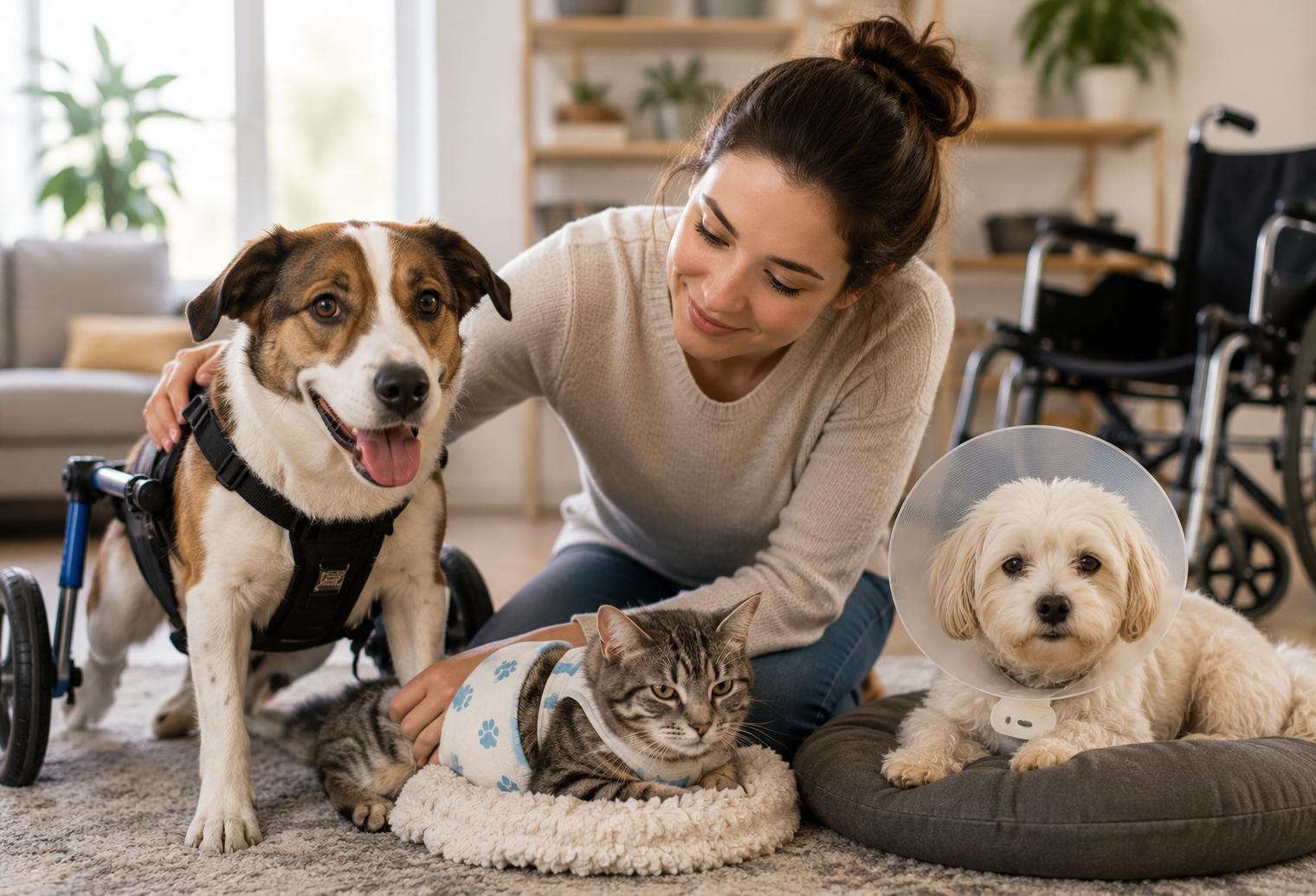
The Complete Guide to Caring for Pets With Special Needs
Caring for a pet with special needs can change the rhythm of everyday life, from morning routines to travel plans and time away from home. For pet owners in Simpsonville, having a clear care plan can make it easier to manage medications, mobility limitations, age-related changes, anxiety, or other needs while keeping a pet comfortable in familiar surroundings.
Special-needs pet care starts with understanding your pet’s individual routine and following veterinary guidance consistently. Written instructions, predictable schedules, accessible food and water, safe movement through the home, and careful observation can all play a role. Because every pet is different, owners should build a care routine around their veterinarian’s recommendations rather than relying on a one-size-fits-all approach.
What local pet owners should know
-
A detailed written routine can help maintain consistency when another person is caring for your pet.
-
Simpsonville’s hot, humid summers may require extra planning for pets whose age, mobility, or health limits their tolerance for outdoor activity.
-
Busy areas around Greenville County can make quieter walking routes and carefully timed outings especially useful for pets that are anxious or easily overstimulated.
-
Changes in appetite, mobility, breathing, bathroom habits, or behavior should be taken seriously and discussed with a veterinarian when appropriate.
-
Emergency contact information and veterinary instructions should always be easy for a caregiver to find.
Why Special-Needs Pet Care Matters in Simpsonville
Special-needs pet care in Simpsonville requires a routine that accounts for both the pet’s individual condition and the realities of life in Upstate South Carolina. Hot summers, thunderstorms, changing routines, travel, and neighborhood activity can affect pets differently, especially seniors and animals with mobility, sensory, or anxiety-related challenges.
Pet owners around Five Forks, Mauldin, Fountain Inn, and other parts of Greenville County may need to think more carefully about when pets go outdoors, how they move through the home, and how their routines are maintained while owners are away.
At Hound About Town, LLC, we understand that owners of special-needs pets may have more details to consider when arranging care. Our goal is to help pet owners think through those details so they can make informed decisions based on their pet’s individual needs and veterinary guidance.
Local Conditions to Consider for Special-Needs Pets
Local conditions around Simpsonville can influence how owners structure daily care, particularly during periods of heat, humidity, storms, and seasonal changes. Because a pet’s medical needs and tolerances are individual, observations at home should complement, not replace, advice from a veterinarian.
Summer heat is an obvious consideration in Upstate South Carolina. A pet with limited mobility may take longer to complete a bathroom break, while an older pet may not tolerate strenuous activity as well as it once did. Outdoor routines may need to be adjusted based on veterinary recommendations and the pet’s response to the weather.
Thunderstorms can also disrupt routines for pets that are sensitive to noise. Owners who know their pets become frightened during storms can document the veterinarian-approved strategies, safe spaces, or routines that help them cope.
How Special Needs Can Affect Daily Pet Care
Special needs can affect feeding, exercise, bathroom breaks, medication routines, mobility, supervision, and the amount of time required for each visit. The most useful care plan is one that explains exactly what is normal for your pet and what changes should prompt attention.
A senior dog may need more time to stand and walk outside. A pet with vision loss may depend on furniture remaining in familiar locations. A pet with hearing loss may need a different approach before being touched or awakened. Animals following veterinarian-directed medication schedules may require especially careful timing and documentation.
For local owners, these details become particularly important when work, appointments, or trips take them away from home.
Warning Signs Pet Owners Should Watch For
Warning signs in a special-needs pet include meaningful changes from that animal’s normal behavior, mobility, appetite, breathing, or bathroom habits. Your veterinarian is the appropriate source for determining whether a specific symptom requires medical attention.
Watch for changes such as:
-
Refusing food or water when that is unusual for the pet
-
New or worsening difficulty standing, walking, or using stairs
-
Unusual breathing or apparent respiratory distress
-
Sudden disorientation or significant behavioral changes
-
Vomiting, diarrhea, or bathroom changes outside the pet’s normal pattern
-
Unexpected lethargy or weakness
-
Signs of pain or unusual vocalization
-
A noticeable change in how the pet responds to a normal routine
Owners should establish veterinary instructions in advance for situations that could require urgent care.
When to Call a Veterinarian or Seek Professional Support
A veterinarian should be contacted when a special-needs pet develops concerning symptoms, experiences a meaningful change from its baseline, or needs medical decisions beyond an established care plan. A pet care professional can help support an established routine, but should not be expected to diagnose a condition or substitute for veterinary care.
Before leaving a special-needs pet in someone else’s care, provide the pet’s veterinarian information, emergency contacts, feeding instructions, behavioral notes, mobility considerations, and any other relevant directions.
Simpsonville pet owners should also explain what constitutes normal behavior for their animal. That baseline can make unusual changes easier to recognize.
Common Challenges for Special-Needs Pets
Common challenges for special-needs pets include mobility limitations, sensory changes, anxiety, complicated routines, and difficulty adapting to environmental changes. Each challenge calls for an individualized approach based on the pet’s abilities and professional veterinary advice.
Mobility limitations: Slippery flooring, stairs, long walks, and difficult transitions may create challenges for some pets.
Vision or hearing changes: Consistency in the home can become more important when a pet relies heavily on memory, scent, touch, or remaining senses.
Anxiety or sensitivity: Thunderstorms, construction, traffic, unfamiliar visitors, and changes in routine may be difficult for some animals.
Age-related changes: Senior pets may need slower outings, more frequent opportunities to go outside, or additional time completing everyday routines.
Complex care schedules: Feeding, medication, bathroom breaks, and other veterinarian-directed routines may need to happen at specific times.
Creating a Safer, More Predictable Routine
A safer routine for a special-needs pet should emphasize consistency, accessibility, clear instructions, and prevention of avoidable stress. Small adjustments around the home can make daily life easier while giving caregivers a clearer framework to follow.
Keep food, water, bedding, and other essentials in predictable locations when appropriate for your pet. Reduce unnecessary obstacles along common walking paths. Write down feeding times and routines instead of relying on verbal instructions alone.
During hot Simpsonville weather, follow your veterinarian’s guidance regarding outdoor activity and pay attention to how your pet responds to heat and humidity. During stormy periods, maintain any familiar comfort routine that has been established for your pet.
What Owners Can Expect From a Well-Planned Care Routine
A well-planned care routine can provide greater consistency and make it easier for another caregiver to understand a special-needs pet’s normal day. It cannot eliminate every health or behavioral concern, but it can reduce uncertainty and improve communication.
Owners should expect to provide more detail than they might for a pet with a simple routine. Written schedules, clear instructions, emergency contacts, access information, and notes about the pet’s personality can all be useful.
The goal is not to make every day identical. It is to give the pet a familiar framework and give the caregiver enough information to respond appropriately.
Common Mistakes When Arranging Special-Needs Pet Care
Common mistakes include providing vague instructions, changing routines unnecessarily, overlooking environmental challenges, and failing to establish an emergency plan. Better preparation can help owners and caregivers avoid preventable confusion.
Mistake: Giving only verbal instructions.
Consequence: Important details may be forgotten or misunderstood.
Better approach: Create written instructions covering the pet’s normal routine and important contacts.
Mistake: Assuming slower movement means a pet needs less attention.
Consequence: Mobility-limited pets may actually require additional time for basic routines.
Better approach: Plan enough time for the pet to move comfortably without rushing.
Mistake: Ignoring Simpsonville’s summer conditions.
Consequence: A routine that works during cooler months may not be appropriate on a hot afternoon.
Better approach: Follow veterinary guidance and adapt outdoor timing to the pet’s individual tolerance.
Mistake: Leaving emergency decisions unclear.
Consequence: A caregiver may not know whom to contact when something changes.
Better approach: Leave veterinarian and emergency contact information with clear instructions.
A Common Simpsonville Pet Care Scenario
A common Simpsonville scenario is an owner who has a senior or mobility-limited pet and needs to be away from home for several hours. The pet may have an established feeding schedule, need a slower bathroom break, and be more comfortable following its usual routine at home.
In this situation, useful preparation could include written care instructions, notes about the pet’s normal movement and behavior, veterinarian contact information, and an explanation of anything the caregiver should monitor.
This is a general example, not a Hound About Town, LLC client case study.
Related Pet Care Solutions
The right pet care solution should support the animal’s established routine without exceeding the caregiver’s capabilities or replacing veterinary care. Owners should discuss their pet’s specific requirements before arranging service so everyone understands what the pet needs.
If you are looking for care in the Simpsonville area, contact us to discuss your pet’s routine, limitations, and care requirements so you can determine whether available options are appropriate.
Comparing In-Home Care and Other Care Options
Choosing between in-home care and another care arrangement depends on the pet’s health, temperament, routine, veterinary guidance, and level of supervision required. Some special-needs pets may benefit from remaining in a familiar environment, while others may require a level of medical monitoring that belongs in a veterinary setting.
Familiar surroundings may be useful for animals that rely heavily on established paths, sleeping areas, feeding locations, or household routines. However, owners should never select convenience over an animal’s medical requirements.
Before deciding, explain your pet’s complete needs and confirm that the proposed care arrangement is appropriate.
Service Areas for Local Pet Owners
Pet owners in Simpsonville and surrounding Greenville County communities such as Five Forks, Mauldin, and Fountain Inn may face similar challenges when arranging reliable care for pets with detailed routines. Always confirm current service availability for your specific address and your pet’s individual needs.
The Cost of Waiting to Make a Care Plan
Waiting to create a special-needs care plan can leave important decisions unresolved when an unexpected trip, long workday, appointment, or emergency arises. Preparing instructions ahead of time gives owners an opportunity to organize information without the pressure of a last-minute situation.
Even if you rarely leave your pet, keeping veterinary contacts, routine information, and emergency instructions current can be worthwhile.
Frequently Asked Questions About Special-Needs Pet Care
What should I include in care instructions for a special-needs pet in Simpsonville?
Include your pet’s normal feeding and bathroom routine, veterinarian information, emergency contacts, mobility or behavioral considerations, and any veterinarian-directed care instructions. Explain what is normal for your pet so a caregiver has a useful baseline for recognizing unexpected changes.
How does Simpsonville summer weather affect special-needs pets?
Hot and humid summer conditions can affect how some pets tolerate outdoor activity, especially animals with health concerns, advanced age, or mobility limitations. Owners should follow their veterinarian’s recommendations and make sure anyone caring for the pet understands the appropriate outdoor routine and warning signs.
Can a pet caregiver replace veterinary care?
No. A pet caregiver should not replace veterinary diagnosis, treatment, or emergency medical care. For pets with ongoing medical needs, owners should establish clear veterinary instructions and explain when the veterinarian or an emergency provider should be contacted.
How can I prepare a senior pet for care while I am away?
Keep the senior pet’s routine as clear and predictable as possible. Document feeding, bathroom breaks, mobility needs, sleeping habits, behavior, and veterinary contacts. If your pet needs special medical care, confirm beforehand that the chosen care arrangement can appropriately accommodate those requirements.
What should Greenville County pet owners include in an emergency plan?
Greenville County pet owners should provide current veterinarian information, emergency contacts, relevant medical information, and instructions explaining what the caregiver should do if the pet develops concerning symptoms. Discuss specific medical questions with your veterinarian before leaving so the plan reflects your pet’s actual needs.
Are familiar surroundings helpful for pets with vision or hearing loss?
Familiar surroundings can be helpful for some pets because established layouts and routines may make navigation more predictable. Avoid making unnecessary environmental changes before leaving the pet with a caregiver, and explain how you normally approach, guide, or communicate with the animal.
How should I plan for a special-needs pet during Simpsonville thunderstorms?
Use the familiar, veterinarian-approved routine that works for your individual pet. If storms trigger anxiety, tell the caregiver where the pet normally feels secure and provide any relevant veterinary instructions. Never introduce medication or a new treatment without appropriate veterinary guidance.
How early should I arrange care for my special-needs pet?
Arrange care early enough to discuss your pet’s needs thoroughly and determine whether the proposed arrangement is suitable. Special-needs pets may require more planning than pets with straightforward routines, so avoiding a last-minute decision can give everyone more time to understand the care requirements.
Give Your Special-Needs Pet a Thoughtful Local Care Plan
Caring for a special-needs pet takes preparation, consistency, and a clear understanding of what makes that individual animal comfortable. For Simpsonville pet owners, planning ahead can make time away from home easier to manage while keeping the pet’s established routine at the center of the decision.
Categorised in: Pet Care